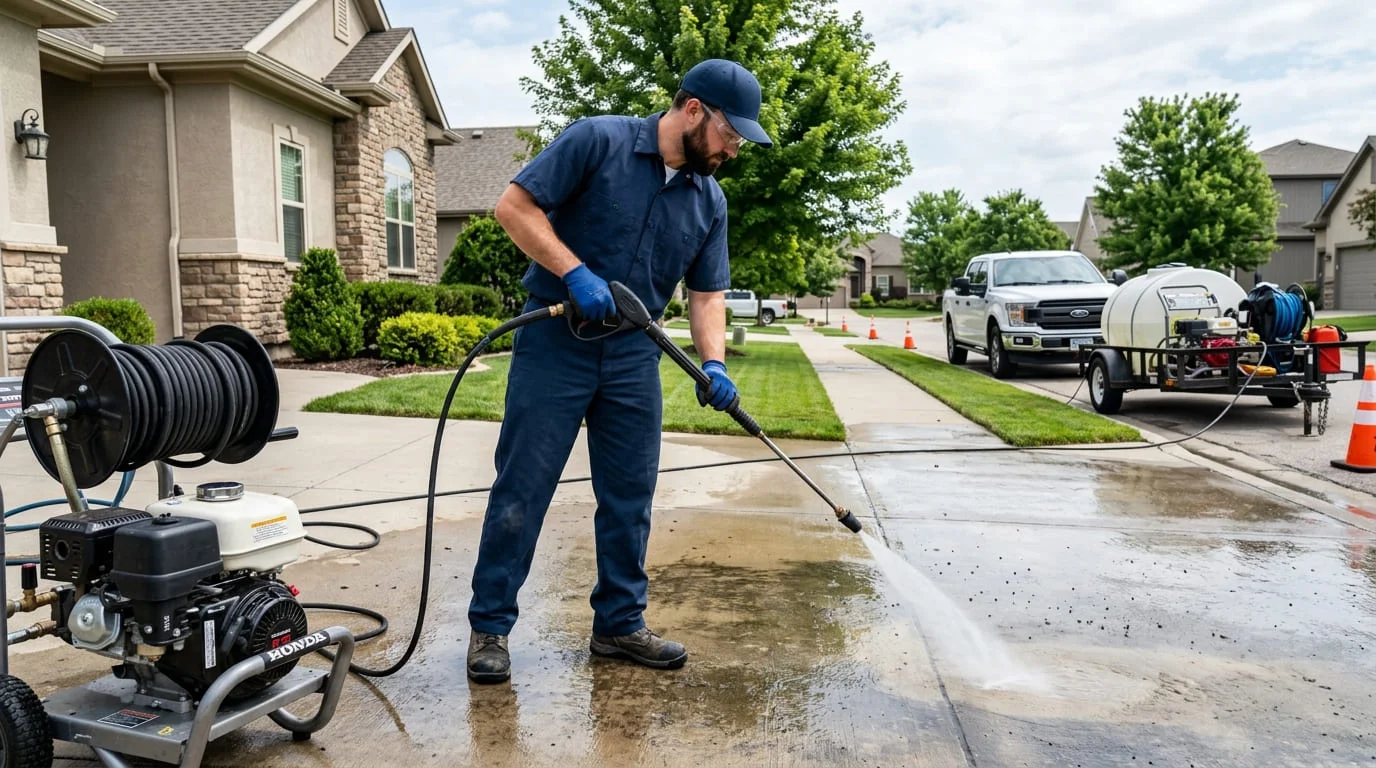
Palm Bay's humidity, heat, and proximity to the water create ideal conditions for algae, mold, mildew, and organic growth on virtually every exterior surface — roofs, driveways, house siding, pool decks, and fences. Left uncleaned, these organisms don't just look bad; they hold moisture against surfaces, accelerating deterioration of paint, stucco, wood, and concrete. Regular pressure washing in Palm Bay is maintenance, not just aesthetics — and the difference between the right technique for each surface and the wrong one is the difference between clean and damaged.
Pressure Washing Services in Palm Bay
- House exterior washing — stucco, vinyl siding, hardie board, and brick — adjusted pressure for each material
- Driveway and walkway cleaning — concrete, paver, and brick surfaces, including oil stain treatment
- Roof soft washing — low-pressure chemical treatment that kills algae and mold without damaging shingles
- Deck and patio cleaning — wood, composite, and concrete deck surfaces prepped for sealing or staining
- Pool deck washing — removing algae and mineral deposits from concrete, travertine, and paver pool decks
- Fence washing — wood and vinyl fencing cleaned before staining or as standalone maintenance
- Concrete sealing — applying penetrating sealer after driveway or patio cleaning to slow algae re-growth
- Pre-paint washing — required prep step before any exterior painting for proper paint adhesion
Why Palm Bay Exteriors Need Regular Washing
Palm Bay's roofs are a visible example of what happens without regular maintenance. The black streaking seen on shingle roofs throughout Port Malabar and Bayside Lakes is Gloeocapsa magma — a cyanobacteria that feeds on the limestone filler in asphalt shingles. It spreads from the ridge down and, left untreated, significantly shortens shingle life. Soft washing kills the organism at the root; pressure washing would strip the granules from the shingles and void any remaining warranty.
Driveways and concrete surfaces tell a similar story. Green and black algae growth on Palm Bay driveways isn't surface-level — it colonizes into the porous concrete and returns within months if the surface is only pressure washed without treatment. A pre-treatment with appropriate chemistry followed by pressure washing, and then sealer application, delivers results that last 2–3 times longer than washing alone.
Signs Your Property Needs Pressure Washing
Exterior surfaces in Palm Bay accumulate organic growth gradually enough that homeowners often don't notice how much has changed until they see an old photo of the house for comparison. Black or dark green streaking running down from the roofline — most visible on the north-facing or shaded side of the roof — is algae growth that spreads steadily once it takes hold and won't go away on its own. A driveway or walkway that's developed a greenish tint or feels slightly slippery when wet, even in areas that don't pool water, has algae growing in the surface texture of the concrete. Stucco or siding with a dull, chalky appearance that rubs off slightly when touched is showing oxidation combined with surface dirt — pressure washing (at appropriate pressure for stucco) restores much of the original color. A pool deck or patio that looks consistently dingy no matter how often it's swept usually has algae or mineral staining embedded in the surface texture that sweeping can't remove.
Our Pressure Washing Process
Pressure washing isn't a one-setting-fits-all job — using the wrong pressure or technique on the wrong surface causes damage that costs far more than the cleaning saved.
- Step 1 — Walk the property and identify surfaces: each surface type (roof, siding, concrete, pavers, wood, composite) is identified since each requires different pressure, nozzle, and chemical approach
- Step 2 — Protect surroundings: plants are covered or pre-wetted, and outdoor electrical fixtures and outlets are noted and avoided
- Step 3 — Pre-treat where needed: roofs and heavily algae-colonized surfaces get a chemical treatment applied first, which does most of the actual cleaning work — pressure alone on these surfaces would either fail to fully clean or damage the surface trying
- Step 4 — Wash at the correct pressure: high pressure for concrete and pavers, medium for brick and hardie board, low pressure for stucco and painted wood, and soft wash (low pressure plus chemical) for roofs and delicate painted surfaces
- Step 5 — Rinse thoroughly: all cleaning solution residue is rinsed from surfaces and surrounding plants are rinsed afterward as well
- Step 6 — Post-treatment: concrete surfaces can be sealed after cleaning to slow algae regrowth, extending the time before the next cleaning is needed
Surface-by-Surface Pressure Washing Guide for Palm Bay
Different exterior surfaces in a Palm Bay home need meaningfully different approaches, and using the same setting across all of them is the most common cause of pressure washing damage. Concrete driveways and walkways tolerate high pressure (2,500–3,000 PSI) well because the surface is hard and durable — this is where pressure washing is most effective at physically blasting away embedded algae and stains. Pavers can also handle higher pressure but need care around the joint sand between pavers, which can be blasted out if the wand is held too close or at too steep an angle — re-sanding joints after washing is sometimes needed. Hardie board and brick siding handle medium pressure (1,200–1,900 PSI) reasonably well. Stucco and painted wood siding need low pressure (under 1,200 PSI) and a wider fan tip, since high pressure can drive water behind stucco or strip paint. Roofs should never see pressure washing — soft washing only, regardless of roofing material, since granule loss on shingles and damage to tile glazing happens quickly under direct pressure.
Seasonal Timing for Pressure Washing in Palm Bay
Timing matters more for pressure washing in Florida than in drier climates, because algae and mold regrow on a predictable seasonal cycle driven by humidity and rainfall. Late winter to early spring (February–April) is the ideal window for a full exterior wash — surfaces have accumulated a winter's worth of growth, and cleaning before the rainy season begins in June means surfaces start the wettest months of the year clean, slowing how quickly growth re-establishes. Washing immediately before exterior painting is also time-sensitive — paint applied over surface contamination, even contamination invisible to the eye, fails prematurely, so pressure washing should happen close enough to the painting schedule that new growth hasn't started again, but with enough dry time (typically 24–48 hours minimum) for surfaces to fully dry before paint is applied. After a major storm, a wash addressing storm debris residue, organic matter deposited by floodwater or wind-blown debris, and any salt residue from storm surge in coastal-adjacent areas helps prevent staining from setting in before it's cleaned.
Pressure Washing Pricing in Palm Bay
Driveway and walkways: $0.15–$0.35 per sq ft. Full home exterior: $250–$600. Roof soft wash: $300–$600. Deck or patio: $150–$350. Pool deck: $175–$400. Written estimate by scope.