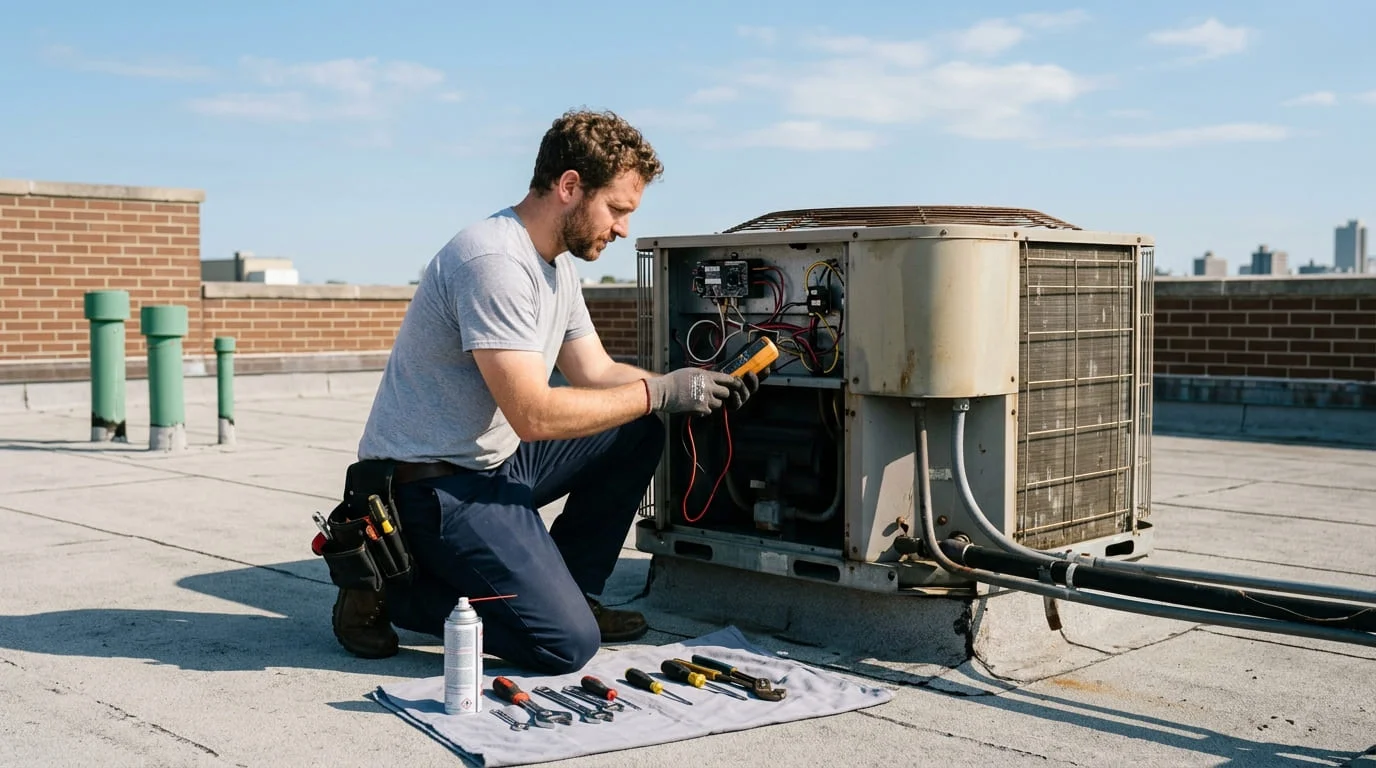
In Palm Bay, your HVAC system runs nearly every day of the year. Unlike homes in northern states that get a natural break in spring and fall, central air in Brevard County is often cycling from March straight through November — and in many homes, it never fully stops. That constant workload means maintenance isn't optional. A neglected system works harder, costs more to run, breaks down at the worst times, and fails years earlier than one that's been properly maintained.
The good news: most HVAC maintenance is straightforward, and staying on top of a few simple tasks is genuinely enough to extend your system's life and keep your utility bills from climbing every summer.
Change Your Air Filter — On Schedule
This is the most impactful thing you can do for your HVAC system, and it's the most commonly neglected. A clogged filter restricts airflow, forcing the blower motor to work harder and causing the evaporator coil to freeze. In Palm Bay's high-humidity environment, a frozen coil also means a flooded drain pan — and that means water damage to your ceiling or walls.
How often: Every 30–60 days for most Palm Bay homes. Every 30 days if you have pets, dusty conditions, or anyone in the home with allergies. The 90-day filters marketed at hardware stores are designed for average conditions — Florida's year-round runtime doesn't qualify as average.
What to buy: A MERV 8–11 filter gives you good filtration without restricting airflow. MERV 13+ filters catch more particles but reduce airflow enough that some older systems struggle with them. When in doubt, stick to what your manufacturer recommends.
Clean Your Condensate Drain Line
Florida's humidity means your HVAC system pulls a significant amount of moisture from the air every day. That moisture drains through the condensate line — a PVC pipe that runs from the air handler to a drain outside or in a utility sink. Over time, algae and mold grow inside that line and eventually clog it completely. When it clogs, the drain pan overflows. You'll notice water staining on your ceiling, water around the air handler, or your system shutting off unexpectedly (if you have a safety float switch installed).
Prevention: Pour one cup of distilled white vinegar into the condensate drain access port once a month. It kills the biological growth before it has a chance to clog the line. This five-second task saves Palm Bay homeowners from expensive ceiling repairs every year.
If it's already clogged: A wet/dry vac on the exterior drain outlet will often clear the blockage. If not, the line may need to be flushed from the air handler end — at that point, call a technician.
Keep the Outdoor Unit Clear
The condenser unit outside needs at least two feet of clear space on all sides to move air efficiently. In Palm Bay's backyard environments, it's common to find units overgrown with landscape plants, packed in with mulch against the fins, or blocked by fencing put up after the unit was installed. All of that reduces efficiency and makes the compressor work harder in our summer heat.
Trim back any vegetation to maintain clearance. Gently rinse the condenser fins with a garden hose every few months to remove dirt and debris — spray from the inside out so you're pushing debris out, not further in. Never use a pressure washer on the fins; the aluminum bends easily and bent fins restrict airflow significantly.
Schedule Professional Maintenance Twice a Year
DIY maintenance keeps the system running between service visits, but it doesn't replace a proper tune-up. A professional HVAC technician checks refrigerant levels, inspects electrical connections, tests capacitors and contactors, cleans the evaporator and condenser coils properly, and identifies components that are about to fail before they take the system down on the hottest day in August.
In Palm Bay, schedule tune-ups in March–April (before summer load) and October–November (before the drier winter months). The pre-summer appointment is the critical one — catching a failing capacitor in April costs a fraction of an emergency weekend call in July.
Check Your Vents and Ductwork
Closed or blocked supply vents create pressure imbalances that stress the system and create hot and cold spots throughout the house. Make sure every supply vent in the home is open — even in rooms you rarely use. Check that furniture hasn't been shifted in front of return vents, which are usually the large louvered grilles in hallways or living areas.
If some rooms are consistently harder to cool than others despite everything else being in order, leaking ductwork may be the culprit. Duct leaks in the attic — where Florida summer temperatures can hit 140°F — dump conditioned air into unconditioned space and are a major source of energy waste in Brevard County homes.
Know the Warning Signs
Catching a problem early saves money. Watch for these indicators that your HVAC system needs attention:
- Warm air from supply vents — could be low refrigerant, a failing compressor, or a dirty evaporator coil
- Unusual sounds — grinding, squealing, or banging indicate mechanical issues that worsen with time
- Short cycling — system turning on and off every few minutes instead of running full cycles
- Spike in electric bills without a change in usage — the system is working harder than it should
- Excess humidity inside — the system is running but not removing moisture effectively
If you're seeing any of these, schedule an inspection before the problem escalates. A simple fix addressed in April doesn't become an emergency replacement in July.
Need help with HVAC maintenance tasks, ductwork repairs, or condensate line issues in Palm Bay? We handle the handyman-side of HVAC upkeep — call (877) 916-5930 or visit our HVAC maintenance service page for more.