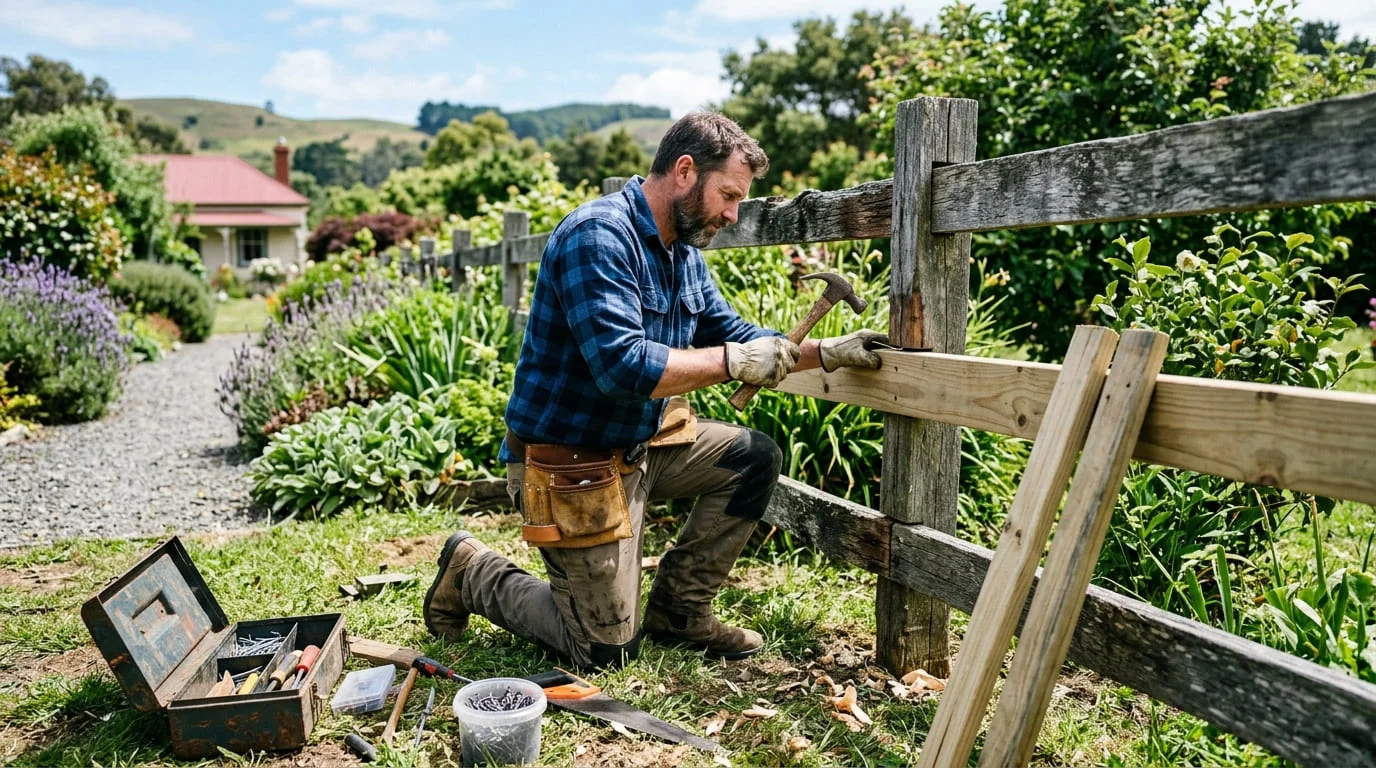
Fence repair is one of the more common maintenance items for Palm Bay homeowners — and Florida's combination of sandy soil, high humidity, intense UV, and annual hurricane season creates fence problems that repeat on a predictable schedule. Understanding what's causing the damage and how to address it correctly prevents the cycle of temporary fixes that require redoing every year.
Leaning Posts: The Root Cause Diagnosis
A leaning fence post has one of three causes — and the right repair depends on which one:
Soil movement: Sandy Florida soil doesn't hold posts as well as clay-heavy soil in other regions. Posts set without adequate depth or without concrete footings shift over time from ground movement, irrigation saturation, and the lateral forces of wind. The post itself may be structurally fine but simply no longer anchored. Fix: excavate around the post, plumb it with a level, and reset it in a proper concrete footing that extends at least 1/3 of the post length below grade.
Concrete footing failure: Cracked or deteriorated concrete footings can allow posts to shift even when the post is sound. Excavate the old footing, remove all the old concrete, and reset with new concrete. Use fast-set concrete (Quikrete or similar) rather than mixed concrete for post setting — it's appropriate for this application and significantly faster.
Post rot at grade: The most common cause of leaning posts in Palm Bay. If the post is soft, crumbling, or discolored at or below the soil line, it's rotted and needs replacement — not bracing, not strapping, not additional concrete. A rotted post under the load of a fence panel in a 70 mph gust will fail. Replace it with ground-contact rated pressure-treated lumber.
Replacing Individual Fence Boards
Individual board replacement is the most common fence repair in Palm Bay — storm damage, rot, impact, and UV degradation all take boards out selectively. Remove the damaged board by pulling the fasteners (a nail bar or impact driver with the appropriate bit). Take the damaged board to a lumber yard to match species, width, and thickness as closely as possible. Cedar and pressure-treated pine are the most common board materials in Palm Bay fences.
Fasten replacement boards with stainless steel or hot-dipped galvanized fasteners — never standard zinc-plated nails or drywall screws. Standard fasteners rust and fail within 3–5 years in Florida's humidity. Stainless or hot-dipped galvanized hardware lasts the life of the fence. Pre-drill near the board ends to prevent splitting, particularly in pressure-treated lumber which is more brittle than untreated wood.
Vinyl and Aluminum Fence Repairs
Vinyl and aluminum fences in Palm Bay don't rot, but they fail in different ways. Vinyl becomes brittle with UV exposure over years and can crack or shatter on impact. Individual vinyl pickets, rails, and post caps are replaceable — contact the fence manufacturer with the product line and color for replacement components. Aluminum fences bent by storm debris can sometimes be straightened with careful application of heat; severe bends typically require section replacement.
Post-Storm Fence Assessment
After a tropical storm or hurricane passes through Palm Bay, assess your fence systematically before leaning on or climbing sections that may appear intact but have compromised posts below grade. Walk the fence line looking for leaning panels, lifted post bases, and sections where pickets have been driven laterally. Document damage with photographs for insurance purposes before beginning any repairs.
Multiple consecutive panel failures after a storm often indicate that the posts throughout the fence run are at the end of their service life — replacing panels without addressing posts results in the same damage in the next storm. A comprehensive fence post assessment in this situation is more cost-effective than repeated board replacements.
For fence repair in Palm Bay — post replacement, board replacement, storm damage repair, and full fence sections — call (877) 916-5930 or visit our fence repair service page for a free estimate.