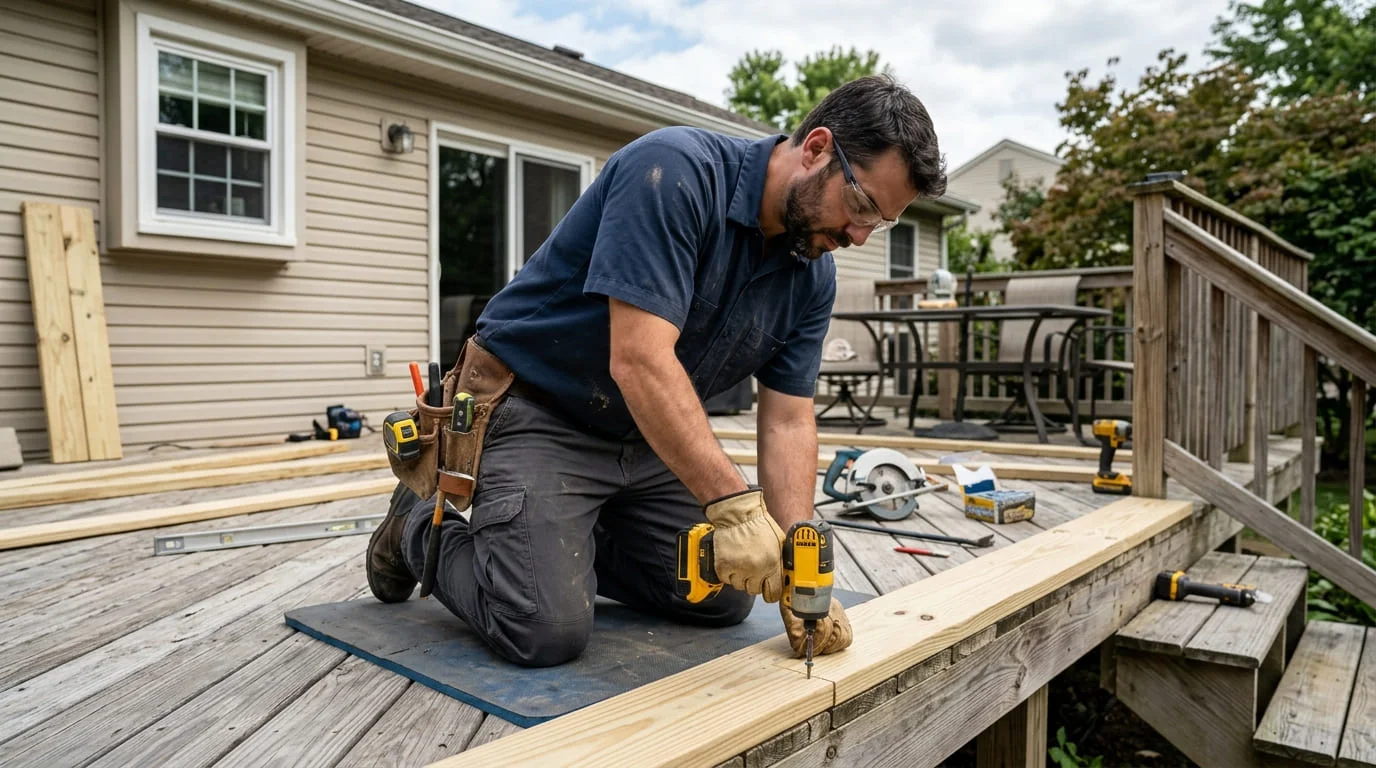
In Palm Bay, a deck takes more punishment in a single year than one in Ohio takes in five. UV exposure that bleaches and dries out wood fibers, humidity that drives moisture into every crack and joint, rainy seasons that cycle wood through wet and dry repeatedly, and occasional tropical storm winds — all of it combines to make deck maintenance a genuine requirement, not an optional upgrade. The decks that fail are almost always the ones that were installed and then never touched. The ones that last are the ones where the homeowner stayed ahead of the maintenance curve.
This guide covers what to inspect, what to fix, and what to do proactively to extend your deck's life and keep it safe to use.
Start With a Thorough Annual Inspection
Once a year — ideally in late fall after hurricane season — walk through a systematic deck inspection. Catching problems early is always cheaper than addressing them after they've progressed.
Check the structural members first: Poke the ledger board (where the deck attaches to the house) with a screwdriver or awl. If the tool penetrates the wood easily, there's rot. Check posts at or near ground level — this is where rot starts most often. Inspect the joists under the deck surface, particularly where they meet the beam and where they've been notched for any reason. Rot at connection points is a structural issue that needs immediate attention.
Check the decking boards: Look for boards that are cracked, splintered, cupped (curved up at the edges), or have begun to separate from the joists below. Probe any soft or discolored areas. A single rotten board doesn't mean the whole deck is failing — but it does mean moisture has found a pathway, and adjacent boards and structure below deserve a closer look.
Check hardware and connections: Inspect joist hangers, post bases, ledger bolts, and any metal hardware for rust. Rusted joist hangers lose structural integrity. In Palm Bay's humid environment, galvanized hardware degrades faster than it would in a dry climate — stainless steel or hot-dipped galvanized is worth specifying for any replacement hardware.
Clean Before You Assess the Finish
Deck cleaning is step one before any staining, sealing, or painting. A deck that looks gray and weathered after cleaning may simply need a fresh coat — but if you seal over dirt, mildew, and old peeling sealer, the new coat won't bond properly and will peel within months. Pressure-wash the deck (1,200–1,500 PSI maximum for wood — higher pressures damage the wood fibers), let it dry fully for at least 48 hours, and then assess the surface.
In Palm Bay's humid climate, mold and mildew on deck surfaces is common. A deck cleaner with an oxygen bleach component kills the biological growth before it's sealed in. Never use chlorine bleach on wood decks — it damages the wood fibers and kills surrounding landscaping.
Seal and Stain on Schedule
In Florida, plan to reseal or restain your wood deck every 12–24 months. The simple test: sprinkle water on the deck surface. If it beads up, the sealer is still working. If it soaks in, the wood is unprotected and needs resealing before the next rain drives moisture deeper.
Sealers vs. stains: Clear sealers protect the wood but do nothing to block UV — in Palm Bay's sun, unprotected wood grays out rapidly. A semi-transparent or solid stain provides both UV protection and moisture resistance and lasts significantly longer. Solid stains last longest but hide the wood grain entirely; semi-transparent stains show the grain but need more frequent reapplication.
Common Repairs Palm Bay Homeowners Face
Board replacement: Individual decking boards can be replaced without tearing out the whole deck. Match the species and thickness of the existing boards as closely as possible, pre-drill all fastener holes, and use stainless or hot-dipped galvanized screws — never standard drywall screws, which rust out in 2–3 years in Florida's humidity.
Post rot at base: When a 4x4 or 6x6 post has rotted at the base, the structural fix is a post repair base — a metal connector that attaches to the existing concrete footing and allows a new post to be set above grade, eliminating ground contact. This is significantly less expensive than full post replacement and structurally sound when installed correctly.
Ledger flashing: The flashing where the deck ledger meets the house is a chronic problem in older Palm Bay homes. Improper or failed flashing allows water to get behind the ledger board and into the house structure. If you see rot in the ledger or the rim joist inside the house above where the deck attaches, flashing failure is almost always the cause.
When to Replace vs. Repair
Repair makes sense when structural members are sound and the decking surface has localized rot or wear. Replacement makes more sense when the structural frame — posts, beams, ledger, joists — has widespread rot, when the deck was built without proper footings, or when the repair cost approaches 50–60% of full replacement cost. A competent inspection gives you that answer clearly.
If your Palm Bay deck needs repairs or a full inspection, we handle deck board replacement, post repair, hardware replacement, and structural assessment. Call (877) 916-5930 or visit our deck repair service page for a free estimate.