Tile is everywhere in Palm Bay homes — floors, bathrooms, kitchen backsplashes, pool surrounds, and lanai surfaces. It's durable, moisture-resistant, and ideal for Florida's climate. But it's not indestructible — a dropped object, a settling crack in the substrate, or simple impact can crack or chip a tile. The good news: individual tile replacement is a manageable repair when approached methodically. The common mistakes are in the removal process, not the installation.
Why Tile Cracks More Often in Florida Slab Homes
Most Palm Bay homes are built on a concrete slab, and Brevard County's sandy, well-draining soil shifts slightly with seasonal moisture swings — saturated during rainy season, drier in winter and spring. That movement transfers into hairline cracks in the slab over years, and a rigid tile bonded directly to a cracking slab has nowhere to go but crack with it. This shows up most in older Port Malabar homes built before modern crack-isolation membranes were standard practice, and it's why a cracked tile that reappears in the same spot after a straight repair is usually a substrate issue, not a tile defect. On lanais, pool decks, and any tile near a saltwater pool, salt exposure also accelerates grout breakdown, which loosens tiles at the edges well before the tile body itself fails.
Before You Start: Find Your Replacement Tile
The first step before any tile removal is sourcing a matching replacement. Tile is produced in batches with slight color and texture variations between runs — even "the same tile" from the same manufacturer may not match if it was produced in a different batch. Check your garage or storage for leftover tiles from the original installation first. If none exist, take a piece of the broken tile to a tile specialty store. Bring the whole piece, not just a picture — matching by eye from a photograph is unreliable.
If a match is truly unavailable, you have options: replace the entire floor in a high-visibility area, use an intentional accent tile, or live with a close match. Know your path before you remove the broken tile.
Remove the Grout First
The removal process starts with the grout surrounding the broken tile — not with the tile itself. Use a grout saw (an oscillating tool with a grout-removal blade works fastest) to remove grout from all four sides of the tile. Go deep enough to free the tile edges completely. This step is what determines whether adjacent tiles survive — grout that isn't fully removed creates a mechanical connection to neighboring tiles, and any lateral force during tile removal transfers directly to them.
Take your time on grout removal. Rushing this step and then using a pry bar on a still-connected tile is how two cracked tiles become five.
Remove the Tile
With grout fully removed, use a cold chisel and hammer to break the damaged tile into smaller pieces and remove them. Start in the center and work toward the edges — never pry from the edge, which transfers force to adjacent tiles. Once the pieces are out, remove the old thinset mortar from the substrate using a floor scraper or oscillating tool. The substrate must be clean, flat, and solid for the new tile to bond correctly.
If the substrate under the removed tile is soft, crumbling, or wet, address that condition before setting new tile. A substrate problem is what caused the crack in the first place in many cases — setting a new tile over the same condition will produce the same result. If you can see a hairline crack in the slab itself under the removed tile (common in older Port Malabar and Palm Bay Village homes), apply a crack-isolation membrane over it before setting the new tile — it lets the slab keep moving slightly with Florida's seasonal soil shifts without transferring that movement straight into the new tile.
Set the New Tile
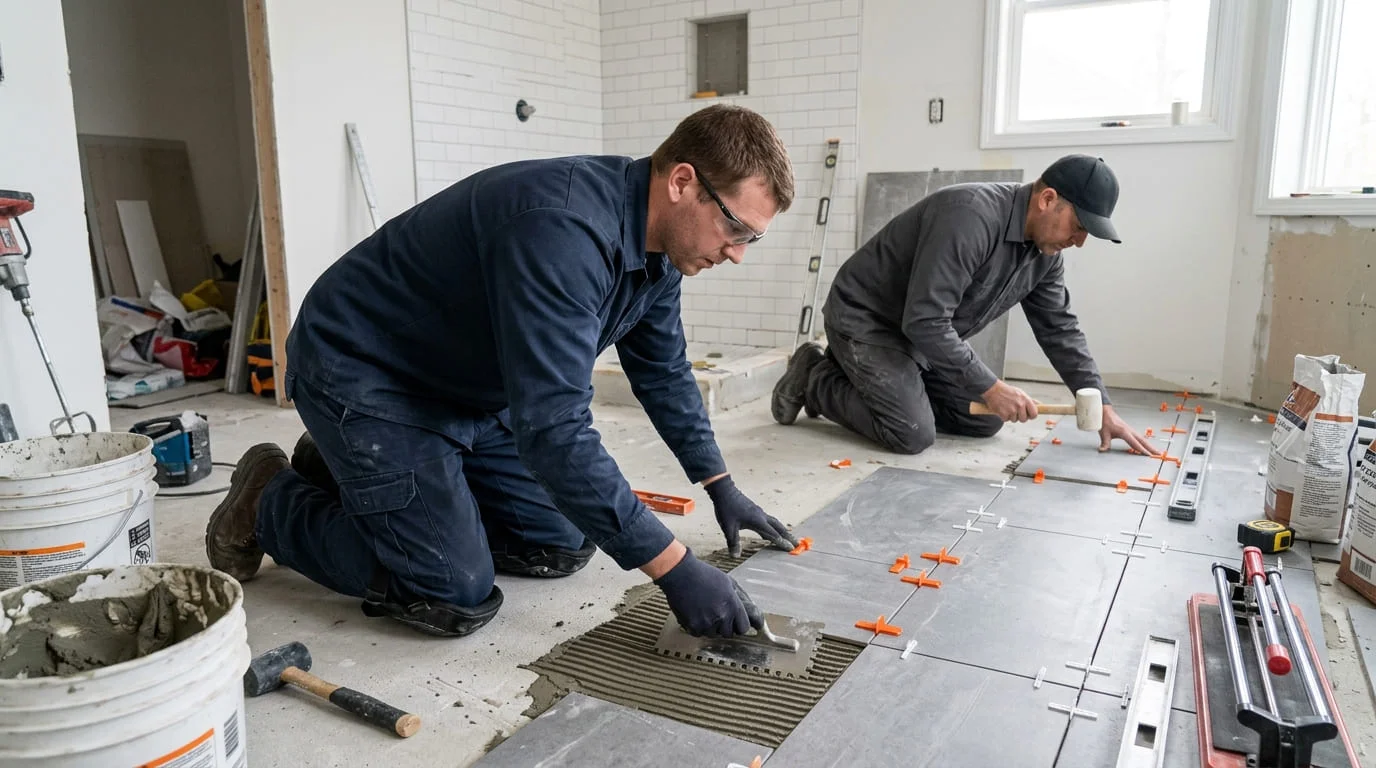
Apply thinset mortar to the substrate using a notched trowel appropriate for your tile size. Back-butter the replacement tile as well — apply a skim coat of thinset to the back of the tile — for better coverage and bond. Press the tile into place with a slight twisting motion to collapse the ridges in the thinset and ensure full contact. Use plastic tile spacers to maintain consistent grout joint width matching the surrounding tile. Check with a straightedge that the new tile is flush with its neighbors — tile adhesive can be repositioned until it begins to set, typically 30–60 minutes depending on temperature.
Allow the thinset to cure fully — typically 24 hours — before grouting.
Grout to Match
Mix grout to match the existing color as closely as possible. Grout color changes slightly as it dries — mix a small test batch and dry it with a heat gun to preview the final color before committing to the full mix. Apply grout with a rubber float, working it into the joints at a 45-degree angle to pack them fully. Remove excess grout with the float at a low angle, then clean the tile surface with a damp sponge in circular motions. Allow the grout to haze over and clean again with a clean damp cloth.
New grout won't match old grout perfectly — old grout has years of accumulated sealer, cleaning residue, and wear that a new section can't replicate immediately. It blends over time with sealing and cleaning cycles.
For tile and grout repair in Palm Bay — single tile replacements, full regrout jobs, and backsplash installations — call (877) 916-5930 or visit our tile and grout repair service page.