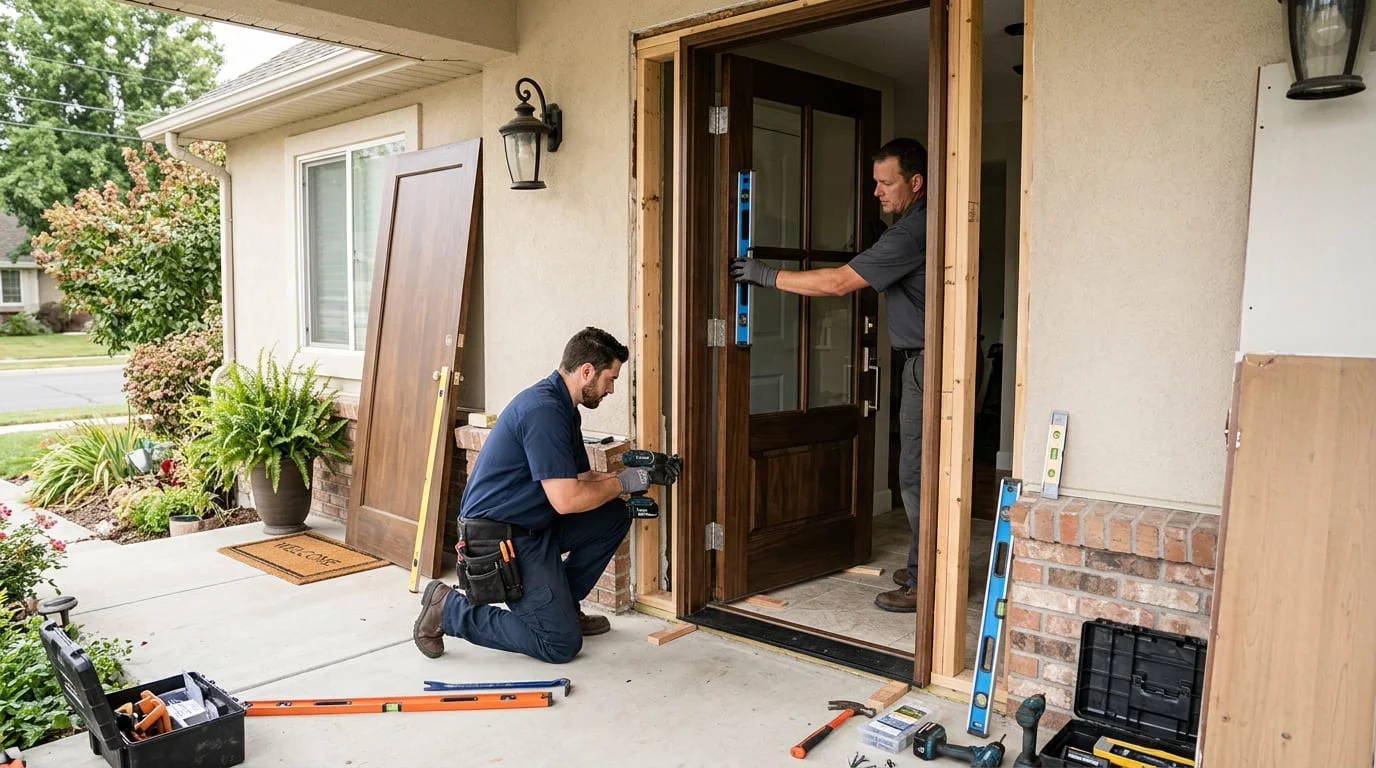
Sticky, binding, and misaligned doors are among the most common home repair complaints in Palm Bay — and they're almost entirely a consequence of Florida's climate. Wood framing, door slabs, and door frames all absorb moisture from the air during the rainy season, and that absorption causes swelling. During dry periods they contract. Over years of this cycle, things shift. Hinges loosen, frames rack slightly, and doors that used to swing freely start requiring a firm shove. Here's how to diagnose what's happening and fix it correctly.
Diagnose Before You Fix
The right fix depends on what's actually causing the problem. Misdiagnosing it leads to work that doesn't solve anything — or makes it worse. Before picking up a plane or a screwdriver, observe the door carefully.
Look at where the door is sticking: Close the door slowly and watch where it makes contact with the frame. Is it sticking at the top corner diagonally opposite the hinges (suggesting the frame has racked)? Rubbing along the full length of the latch side? Dragging on the floor? Each pattern has a different cause and fix.
Check the hinges first: Loose hinges are the most common cause of interior doors that stick or sag — and the easiest to fix. Open the door and check each hinge. If you can wiggle the door at the hinge side, or if you see gaps at the hinge leaves, loose screws are likely the cause. Before doing anything else, tighten every hinge screw.
Fix 1: Tighten Loose Hinges
Try tightening the existing screws first. If a screw spins without catching, the hole has stripped — the screw has no wood to grip. The quick fix: remove the screw, push a wooden toothpick or wooden matchstick (with the head broken off) into the hole with a drop of wood glue, let it dry, trim it flush, and reinstall the screw. The wood fills the stripped hole and gives the screw threads something to grip again.
For a more permanent fix on high-use doors, replace the existing 3/4" hinge screws with 3" screws that penetrate through the door frame into the structural framing behind it. These screws can't pull out — they're anchored in the stud, not just the door jamb.
Fix 2: Adjust the Strike Plate
If the door latches but requires effort to close, or the latch bolt hits the strike plate instead of engaging cleanly, the strike plate may be misaligned rather than the door itself. Close the door gently and look at where the latch bolt contacts the strike plate. If it's hitting the top or bottom edge of the opening rather than going through it, the strike plate needs to move.
Loosen the strike plate screws and shift it in the direction needed — up, down, or horizontally. Most strike plates have some adjustment available within the existing screw holes. If not, use a chisel to enlarge the mortise slightly in the direction you need it to move, then reinstall. This is often a 15-minute fix that eliminates the need for any door planing.
Fix 3: Plane or Sand the Door Edge
If the door is genuinely swollen and rubbing on the frame — not a hinge or strike plate issue — you need to remove material from the edge that's binding. Use a block plane for a clean, controlled removal, or a belt sander for larger areas. Take off very small amounts at a time and test the door frequently. It's easy to remove too much.
Work on the hinge side of the door only if absolutely necessary — removing material there changes the gap and can create alignment problems. The latch side edge is almost always the right place to plane. After planing, seal the raw wood edge with paint or primer before the door goes back into service — unfinished wood on a door edge in Florida's humidity will swell again faster than sealed wood.
Fix 4: Reset a Dropped Door
Heavy solid-core doors and older doors with worn hinge mortises sometimes drop enough that the bottom corner of the latch side drags on the floor. If tightening and replacing hinge screws doesn't solve it, a loose hinge leaf is usually the cause. Remove the hinge leaf entirely, clean out the mortise, apply wood glue, reinstall the hinge with longer screws into the structural framing, and let it cure. In most cases this brings a dropped door back into alignment.
When to Replace Rather Than Repair
If the door frame itself has racked — typically visible as a parallelogram-shaped opening rather than a rectangle — the fix requires squaring the frame, which is a carpentry repair beyond door adjustment. Similarly, if an exterior door has swollen and warped permanently (common in older doors that lost their finish and absorbed moisture through seasons), replacement is more cost-effective than repeated repair.
For door repair, alignment, and replacement in Palm Bay, call (877) 916-5930 or visit our door repair service page. We diagnose the actual cause and fix it correctly the first time.