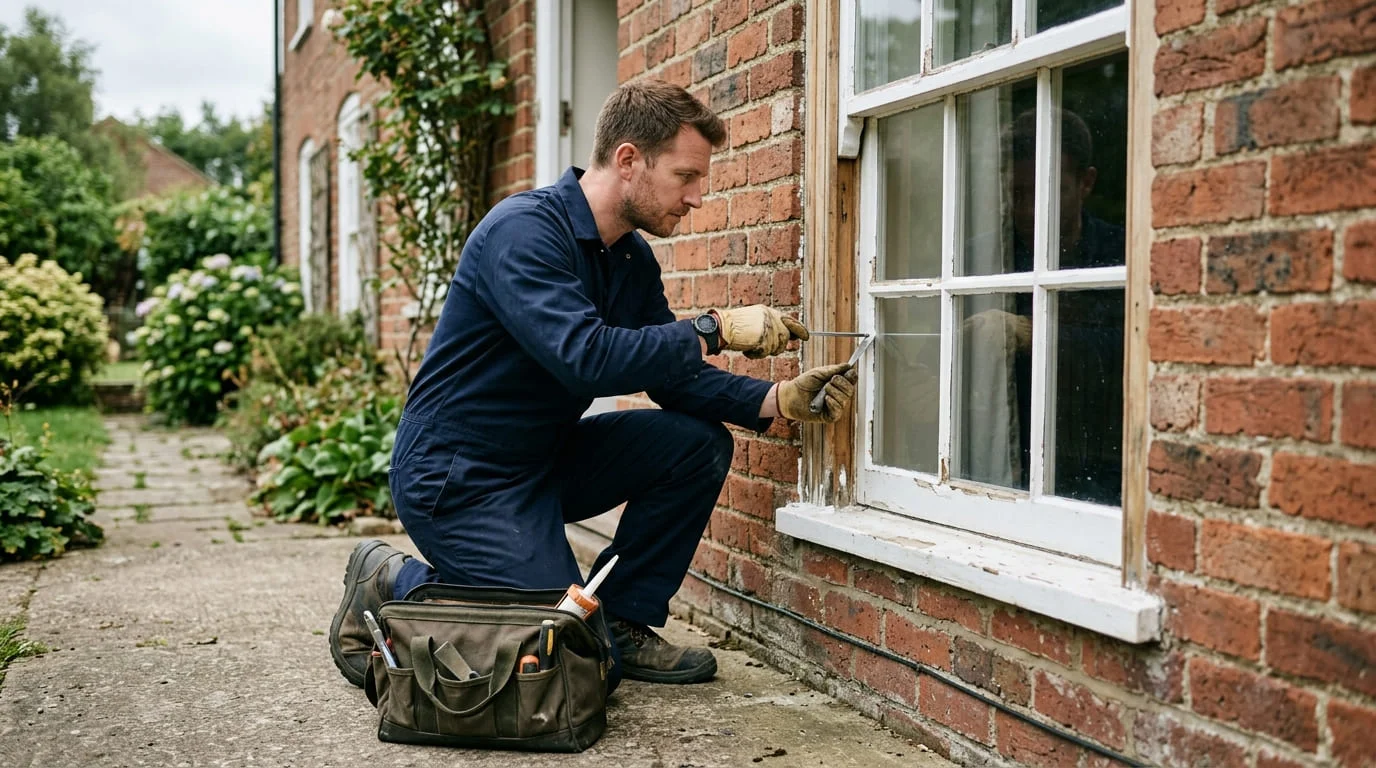
Wood windows and doors require more maintenance in Florida than anywhere else in the country. The combination of intense UV that bleaches and dries out paint, high humidity that drives moisture into any unprotected wood surface, and the cycling between rainy season saturation and dry season desiccation creates a punishing environment for any wood element in a Palm Bay home. The difference between windows that last 40 years and ones that rot in 15 is entirely in whether the finish is maintained and the caulk joints are kept intact.
Understand What's Actually Protecting the Wood
The paint or stain on wooden windows and doors isn't primarily decorative — it's the wood's moisture barrier. As long as the finish is intact and the caulk joints are sealed, water cannot enter the wood. Once the finish fails — paint peeling, bare wood exposed, caulk joints cracked or missing — moisture enters the wood and begins the rot process. In Palm Bay's climate, a single summer rainy season of unprotected exposure is enough to begin deterioration that takes years to reverse.
This means the maintenance priority is simple: inspect the finish and caulk joints annually, and address any failures before they allow moisture entry.
Annual Inspection: What to Look For
Walk around the exterior of every wooden window and door in your Palm Bay home once a year — March or April, before rainy season, is the ideal time. You're looking for:
- Paint failure: Peeling, cracking, or chalking paint — anywhere bare wood is exposed or will be exposed when it peels further. These areas need immediate attention.
- Caulk joint failure: Gaps, cracks, or missing caulk at the joint between the window frame and the exterior wall, at mitered corners of trim, and between the door frame and the surrounding surface. Run your finger along every caulk joint. Gaps you can feel are gaps that will allow water entry.
- Soft spots: Press firmly on window sills, door bottom rails, and any horizontal wood surface that faces up. Wood that's soft under pressure is already rotting and needs to be assessed — sometimes it's surface rot that can be treated and sealed; sometimes it's deeper deterioration that requires replacement.
- Glass seal failure: In double-pane windows, a foggy or hazy appearance between the panes means the seal has failed and moisture has entered the insulating space. This doesn't affect the wood, but it does indicate the window unit should be replaced.
Re-Caulk on Schedule
Exterior caulk around wooden windows and doors in Palm Bay needs inspection every year and recaulking every 3–5 years, or sooner if it shows cracking or separation. In Florida's UV intensity and temperature swings, caulk that would last 10 years in a moderate climate lasts 3–5 years here.
For recaulking, remove all old caulk completely using a caulk removal tool — applying new caulk over old, failing caulk just delays the failure. Clean the joint surface, allow it to dry, and apply a continuous bead of paintable polyurethane or siliconized acrylic caulk. Smooth with a dampened finger or caulk tool and allow to cure before painting over it.
Refinish Before Bare Wood Is Exposed
The best time to repaint or restain wooden windows and doors is before the existing finish fully fails — not after. A surface that's peeling slightly but still has intact areas can be addressed with scraping, sanding, spot priming, and a fresh topcoat. A surface where paint has been completely gone for a season requires more aggressive prep, more primer, and sometimes wood hardener or consolidant if surface rot has begun.
For exterior wood, a quality exterior paint with a high-resin content holds up better in Florida's UV than standard exterior paint. Products specifically formulated for trim and doors — like 100% acrylic exterior paints with mildewcide additives — provide the longest service life in Palm Bay's climate.
Repairing Early Rot Before It Spreads
Caught early, surface rot in wooden windows and doors can be stabilized rather than requiring full replacement of the affected component. A two-part epoxy wood consolidant soaks into soft, punky wood and hardens it. Once the consolidant has cured, an epoxy wood filler is applied to rebuild missing or damaged areas, shaped to profile, and sanded smooth before priming and painting. When done correctly, an epoxy repair is durable and invisible under paint — and far less expensive than sill or rail replacement.
However, if the rot has progressed into the structural members of the window — the jambs, sill, or rough framing behind the window — the affected wood needs to be removed and replaced. Epoxy patching over structural rot creates a cosmetic fix over a continuing failure.
For window repair, caulking, repainting, and wood rot assessment in Palm Bay, call (877) 916-5930 or visit our window repair service page. We assess honestly and recommend only the repairs that are genuinely needed.